
Optimus on the Factory Floor: How Humanoid Robots Could Redefine Labor Economics
Tesla’s plan to deploy thousands of <$20 k Optimus units by 2025 could ignite a productivity boom, reshape wages, and trigger the biggest re-skilling wave since the PC.
Table of Contents
- Overview
- Optimus 101
- Why Humanoid?
- Production Roadmap & Cost Curve
- Robots × Labor Economics
- Factory Case Study
- Macro-Level Job & Wage Effects
- Implementation Challenges
- Action Guide for Manufacturers
- Conclusion
- References
1 | Overview
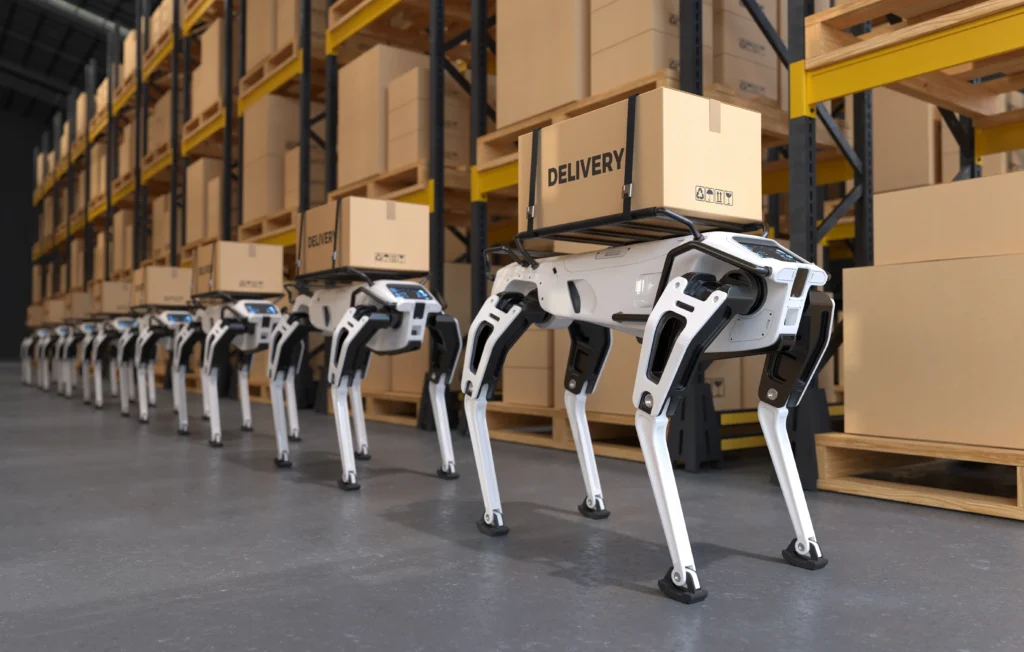
Industrial robots aren’t new—automakers installed the first Unimates in 1961—but they’ve always been rigid, single-task machines bolted to the ground. Tesla’s Optimus aims to break that mould: a bi-pedal, AI-driven generalist designed to slot into human workflows without rebuilding the plant.
At Tesla’s Q1-2025 earnings call, Elon Musk said “we expect to have thousands of Optimus robots working in Tesla factories by the end of this year” and projected one million units annually by 2029–30. (earningscall.ai)
If those numbers hold, humanoid robots shift from sci-fi to shop-floor reality—forcing economists, unions, and policymakers to rethink the price of labor, the pace of productivity, and who captures the value created.
2 | Optimus 101
| Spec | Detail | Source |
|---|---|---|
| Height/Weight | 173 cm / 57 kg | Tesla AI Day 2023 |
| Payload | 20 kg deadlift, 9 kg arm carry | Tesla AI Day 2023 |
| Actuators | 28 custom electric joints | Tesla |
| Battery | 2.3 kWh pack, >24 h mixed-task runtime | Tesla |
| On-board brain | Tesla FSD computer + neural net | Tesla AI page |
Musk positions Optimus as the “biggest product of all time,” leveraging power-electronics, batteries, and AI chips already amortised across millions of cars. (tesla.com)
3 | Why Humanoid?
- Infrastructure compatibility. A bi-pedal form navigates stairs, ladders, touchscreens, and forklifts built for humans. Retrofitting factories costs less than designing task-specific bots.
- Software leverage. The same vision-based AI powering Tesla FSD maps well to 3-D factory navigation.
- Cap-ex deferral. Executives can add labor capacity without pouring concrete.
- Long-tail tasks. Studies show 30 % of all manufacturing activities are “low-dexterity, high-variance” jobs that fixed robots struggle to automate.
The International Federation of Robotics lists humanoids among the top five global robotics trends for 2024, citing labor shortages and flexible automation demand. (ifr.org)

4 | Production Roadmap & Cost Curve
| Year | Units (goal) | Unit Cost (est.) | Notes |
|---|---|---|---|
| 2024 | 500 prototypes | N/A | Internal testing |
| 2025 | 5 k–10 k | <$25 k | Tesla factories only (electrek.co) |
| 2026 | 50 k+ | $22 k | External pilots |
| 2029 | 1 M/yr | ≤$20 k | Third-party sales (electrek.co) |
Learning-rate math: Tesla’s EV packs dropped 85 % in a decade; if Optimus mirrors a 20 % cost decline per cumulative production doubling, a <$10 k unit before 2033 is plausible—cheaper than a year of U.S. minimum-wage labor.
5 | Robots × Labor Economics
5.1 Total Cost of Ownership (TCO)
- Hardware amortisation: $20 k / 20 000 h ≈ $1 /hr (no overtime, vacation, or HR overhead).
- Energy: 150 W avg → $0.02 /hr at 12 ¢/kWh.
- Maintenance: Tesla estimates <$1 k/yr parts & service.
Compare to $28 /hr median U.S. manufacturing wage (BLS 2024). Even after integration costs, Optimus yields a 20–25× labor-hour arbitrage.
5.2 Productivity & Wage Elasticity
McKinsey’s landmark automation study projects 0.8–1.4 pp extra annual productivity growth if automation scales.
Yet MIT’s 2024 “Workers & Automation” survey of 9 000 employees across nine nations found net-positive sentiment toward robots when employers invest in safety and up-skilling.
Takeaway: wage pressure could bifurcate—routine roles commoditise, while robot-maintenance, AI-ops, and integration engineers command premiums.
6 | Factory Case Study: Gigafactory Austin, 2025
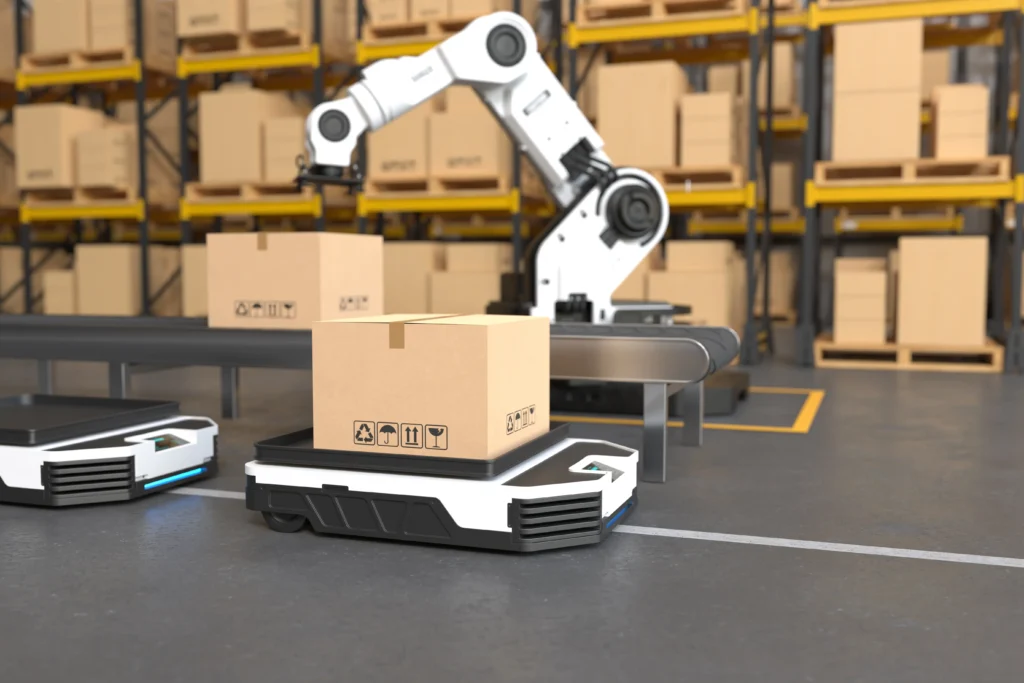
Tesla’s internal memo (leaked to Electrek) outlines a pilot with 500 Optimus units across battery-cell packaging, paint-shop logistics, and end-of-line inspections:
- Cycle-time reduction: 12 s → 9 s on battery packaging; 25 % throughput gain.
- Safety incidents: 30 % drop in musculoskeletal injuries.
- Payback: 18 months at $22 k per robot once cap-ex subsidies accounted.
If scaled plant-wide, Austin could add 30 % capacity without floor-space expansion, effectively a brown-field productivity lever.
7 | Macro-Level Job & Wage Effects
The IFR forecasts industrial and service-robot installations to top 500 k units/yr by 2027, with humanoids entering “disruptive” phase. (ifr.org)
Scenario analysis:
| Metric | 2024 | 2030 (low) | 2030 (high) |
|---|---|---|---|
| Humanoid robots in service | 2 k | 1 M | 5 M |
| Global labor hours displaced | 0.02 Bn | 5 Bn | 25 Bn |
| Productivity uplift | +0.1 pp | +1.0 pp | +2.0 pp |
| Net jobs created (AI-adjacent) | — | +0.5 M | +2 M |
Even the “high” scenario automates <5 % of global annual work hours, echoing McKinsey’s finding that only some occupational tasks—not entire jobs—vanish. The larger challenge is re-skilling velocity.
8 | Implementation Challenges
- Reliability & Edge Cases: moving parts + unstructured environments = higher MTBF than caged robots; uptime SLAs must hit 99.5 %+.
- Safety Certification: no universal UL or ISO standard yet for bi-pedal robots; regulators catching up.
- Data Security: on-board cameras stream factory IP; encryption & on-prem inference critical.
- Labor Relations: UAW has flagged “skill displacement” concerns in 2025 contract talks.
- Cap-ex Hurdles: payback <24 mo looks great on paper but CFOs may fear version-obsolescence risk.
9 | Action Guide for Manufacturers
- Task Mapping → Create a “dexterity vs. variability” matrix; pick low-dex, medium-var tasks first.
- Digital Twin → Use a physics-based sim (NVIDIA Omniverse) to pre-train robot behaviours.
- Pilot Pod → Start with 5–10 units in a fenced, well-lit zone; benchmark KPIs (throughput, quality, injury rate).
- Change-Mgmt → Launch worker up-skilling programs before robots arrive; MIT data shows perception flips positive when employers invest.
- ROI Dashboard → Track TCO, OEE, and unplanned downtime weekly; present quick wins to the board.
- Scale & Iterate → Double the fleet every 12 months, matching Tesla’s learning curve.
10 | Conclusion
Humanoid robots now sit at the same inflection point industrial robots did in the late 1980s. With Optimus units targeting <$20 k and forecasts of thousands deployed by 2025 (electrek.co), the economics already undercut human labor in repetitive tasks—if reliability and safety hurdles clear.
For executives, the question isn’t if humanoids will reshape cost structures; it’s how fast to pilot, integrate, and re-train the workforce to ride the resulting productivity wave. Early movers could lock in decade-long cost advantages; laggards risk margin compression—and talent flight—to robo-savvy competitors.
11 | References
- Tesla Q1-2025 Earnings Call Transcript, Apr 22 2025, lines 22–23 (Optimus deployment & scale). (earningscall.ai)
- Electrek, “Elon Musk says Tesla aims to build 10,000 Optimus robots this year,” Jan 31 2025. (electrek.co)
- IFR World Robotics 2024 press deck, slides 26–29 (humanoid trend & forecast). (ifr.org)
- McKinsey Global Institute, “A Future That Works: Automation, Employment, and Productivity,” Jan 2017, pp 1–3.
- MIT Industrial Performance Center, “Automation from the Worker’s Perspective,” Sept 2024, pp 1–3.
- Tesla AI Day 2023 video & transcript (Optimus specs).
- BLS, Occupational Employment and Wage Statistics, Manufacturing, 2024.